Antwerp · Belgium
DOOH in Antwerp: the advertising screens along the city's axis, counted
Antwerp does not spread, it lines up. Almost everyone who arrives, shops, studies or leaves moves along the same axis, from Antwerpen-Centraal through De Keyserlei to the Meir and the fashion streets behind it, and the network sits on that axis: 40 screens around the station and the diamond streets, another 70 between the Meir and the cathedral, inside a walk of about two kilometres. Across the whole catchment glooh books 350+ venues and 600+ screens, and 180 of those ride in taxis rather than stand anywhere. A campaign opens at €250 per week.
Inventory current as of 2026-08
Antwerp
600+ screens mapped
Inventory current as of 2026-08
Explore Antwerp in the simulator →- 30
- Entertainment
- 200
- Transit
- 190
- Retail
- 60
- Outdoor
- 110
- Health & beauty
Zones across Antwerp
Each zone is a real catchment: its screens, its venues, its audience.
The northern and eastern districts
90 screens
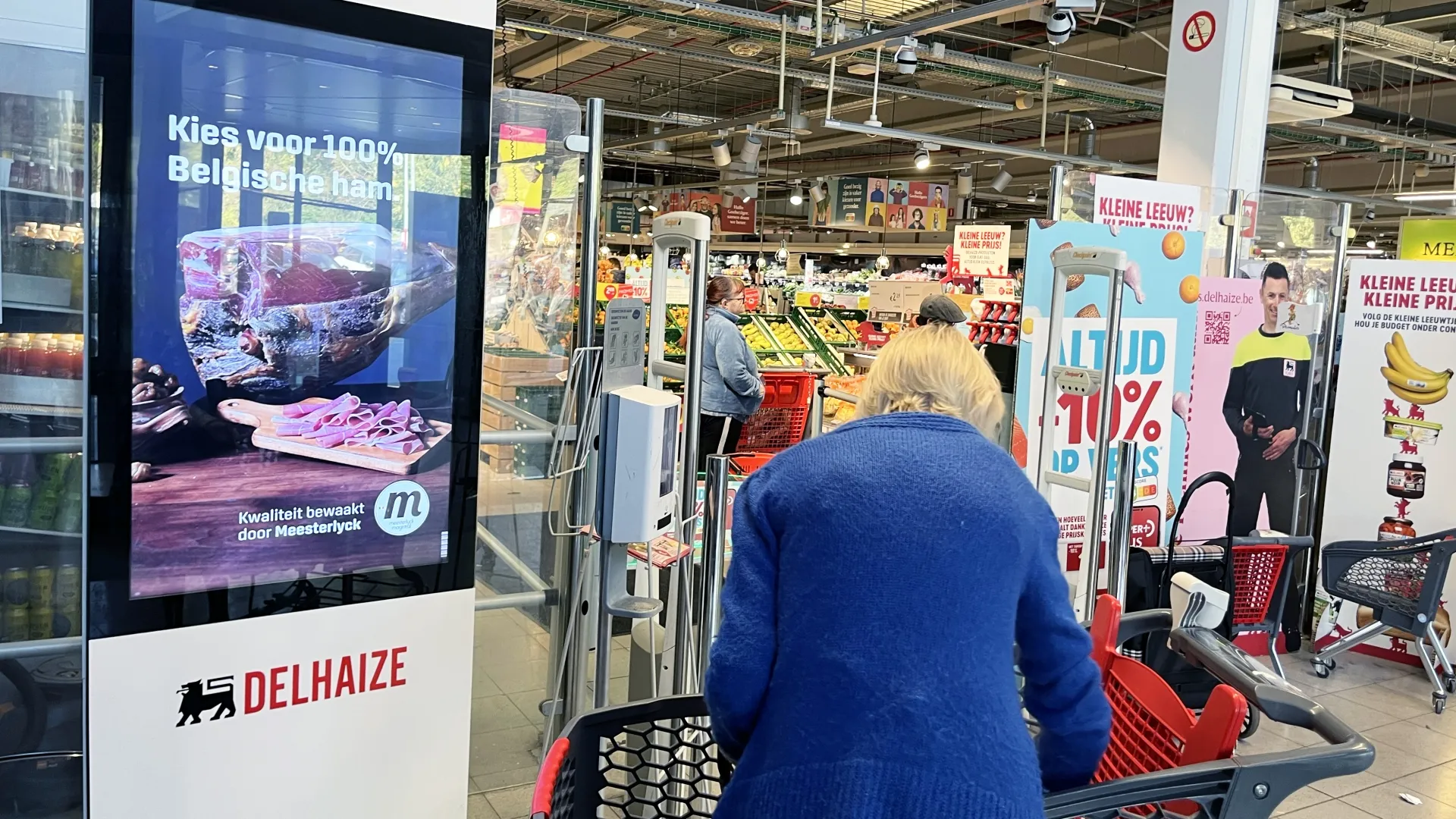
The largest fixed buy on this page, and the one most people underestimate: 90 screens across 45 venues in Merksem, Deurne, Borgerhout, Ekeren and Borsbeek, with 41 supermarkets and 57 schools inside the perimeter. These are districts of Antwerp, not suburbs of it, and the retail fabric is young, dense and local.
Points of interest in the zone:
57 schools · 3 universities · 13 gyms · 5 stations · 41 supermarkets
The ring municipalities
90 screens
The ring municipalities, Wijnegem, Mortsel, Brasschaat, Schoten, Wommelgem, Edegem and Aartselaar, hold 90 screens across 35 venues, the second largest fixed count here. Retail parks, shopping centres and fuel stations on the roads in. People who live outside the ring still call the trip into town going to the city, and they do a lot of their spending before they get there.
Points of interest in the zone:
83 schools · 10 gyms · 3 stations · 35 supermarkets · 2 malls
The Meir and the historic centre
70 screens
The shopping and heritage half of the axis, and the one place where our network and the student population overlap: 32 higher-education sites sit inside this perimeter, because the university's city campus is woven into the same streets people already walk. Screens stand along the pedestrianised Meir, around Groenplaats and the cathedral, and in the premium branch south through Huidevettersstraat and Schuttershofstraat.
Points of interest in the zone:
16 schools · 32 universities · 7 gyms · 3 stations · 24 supermarkets · 2 malls
The southern districts
50 screens
The southern districts, from Zurenborg's art nouveau streets through Berchem station and out to Wilrijk and Hoboken: 50 screens over 20 venues. Gyms, supermarket entrances and fuel stations, which is the honest description of a residential belt with two commuter stations in it.
Points of interest in the zone:
45 schools · 1 university · 6 gyms · 2 stations · 34 supermarkets
Antwerpen-Centraal and the Diamond quarter
40 screens
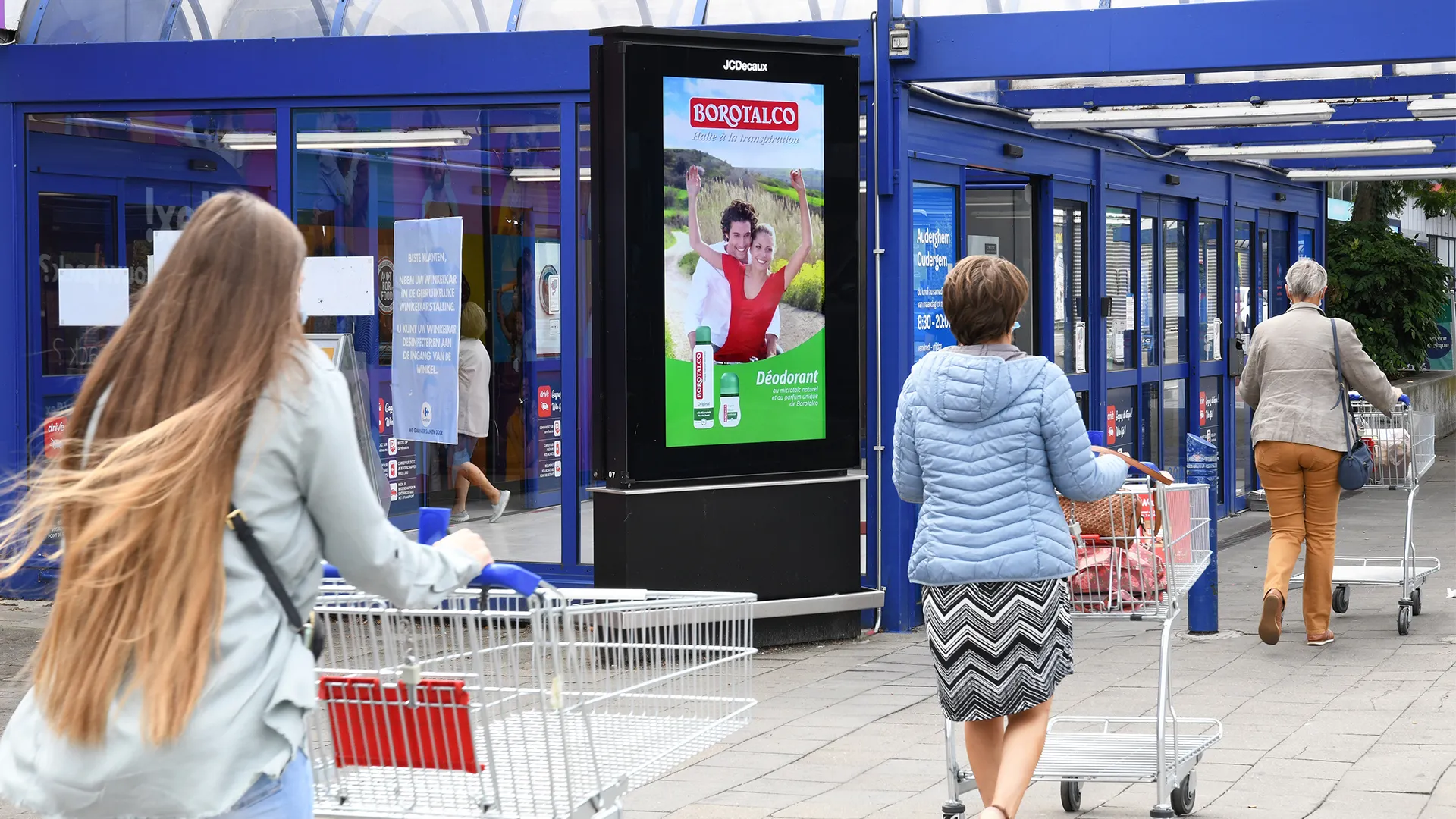
The densest fixed address in the city and the top of the axis. Arrival levels and concourses inside Antwerpen-Centraal, the forecourt on Astridplein, De Keyserlei running west, and behind the tracks the trade streets of the diamond quarter around Hoveniersstraat, Schupstraat and the retail end of Pelikaanstraat. People here are early, waiting and receptive, which is a different mood from anywhere else on this page.
Points of interest in the zone:
2 schools · 1 university · 2 gyms · 4 stations · 7 supermarkets · 2 malls
Left bank and Waasland
35 screens
The left bank plus the Waasland municipalities across the Scheldt: 35 screens over 15 venues, supermarket entrances and street positions rather than a centre. Worth knowing that the river is a real border for behaviour here, not a line on a map: this side is reached through the tunnels, and it shops locally.
Points of interest in the zone:
15 schools · 2 gyms · 2 stations · 12 supermarkets
The rest of the Antwerpen district
35 screens
What is left of the core district once the axis, Het Zuid and the north are counted separately: Kiel, Middelheim and the fringes running out towards the port. 35 screens across 10 venues, weighted towards fuel stations and a cinema rather than street furniture.
Points of interest in the zone:
24 schools · 4 universities · 2 gyms · 1 station · 7 supermarkets · 1 mall
Het Zuid
25 screens
The museum and gallery district, and a small buy: 25 screens across 10 venues, mostly retail counters and street furniture around the Zuid grid and Harmonie. Right for an art-and-design audience on a defined perimeter, wrong if you expected the volume the centre gives you.
Points of interest in the zone:
35 schools · 4 universities · 7 gyms · 21 supermarkets
Antwerpen-Noord and het Eilandje
10 screens
Our thinnest zone, and better said plainly than dressed up. The docks, the MAS and the whole Eilandje waterfront come to 10 screens over 5 venues, against 15 supermarkets and 7 gyms inside the same perimeter. If your catchment is Eilandje, say so and we will tell you honestly whether it is worth buying yet.
Points of interest in the zone:
24 schools · 9 universities · 7 gyms · 4 stations · 15 supermarkets
Antwerpen-Centraal
The address all of Antwerp passes through.
35 screens, one station
- Daily, not fortnightly
- the same face, five mornings a week
- Long distance
- business travellers, not only commuters
- Waiting
- on a platform, attention has nowhere to go
- Out and back
- one traveller, two exposures a day
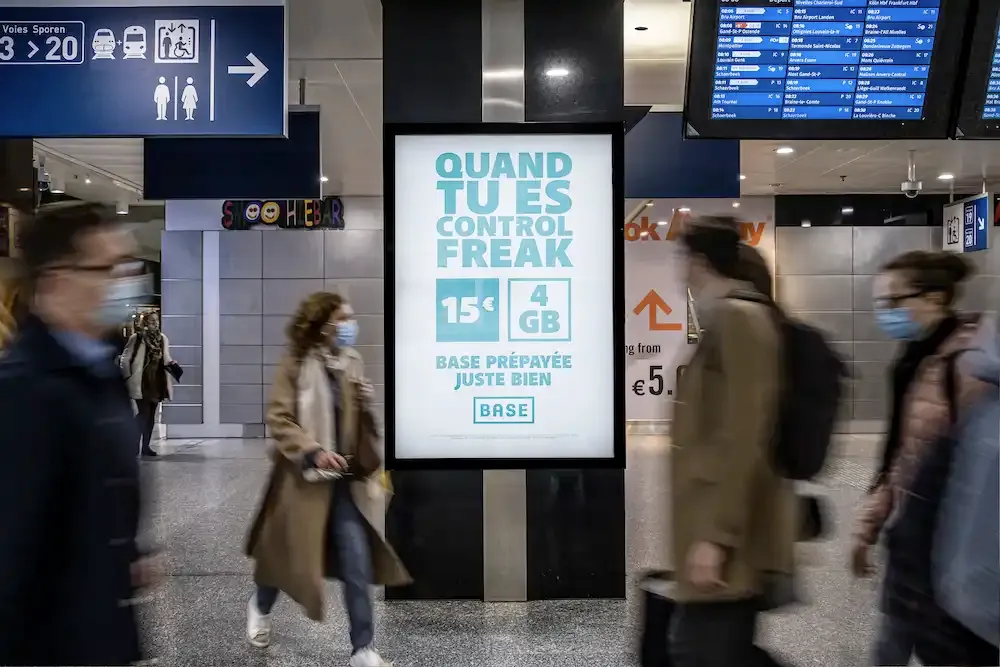
Centraal is not only where the trains stop, it is where the city starts. Four levels of platforms under a domed hall people photograph without travelling anywhere, high-speed services that put Amsterdam, Paris and London within reach, and directly behind it the few streets where the diamond trade works. The screens run from the arrival levels out into the forecourt on Astridplein, which is the first two hundred metres of every walk into town.
See prices in Antwerp →Your customers are already there
Our screens surround the stores where Antwerp shops. Pick a chain and the map lights up our screens within 300 m of its stores.
Our screens in Antwerp, chain by chain
This view is a glimpse of glooh's data layer. On annual plans we map your stores AND your competitors': zones to conquer, zones to concede.
See the competitive analysis toolkit →The neighborhoods where your screens work
Antwerpen-Centraal and the diamond streets
40 screens across 20 venues in under a square kilometre, of which 35 sit inside the station itself. This is where an international audience physically lands, and where the walk into the city begins.
The Meir and the historic centre
70 screens over 20 venues along the pedestrianised shopping street, around Groenplaats and into the premium side streets. The same perimeter holds 32 higher-education sites and 7 gyms.
Het Zuid
Museums, galleries and restaurants on a compact grid: 25 screens over 10 venues, with 35 schools and 21 supermarkets in the perimeter. A precise buy rather than a big one.
The northern and eastern districts
Merksem, Deurne, Borgerhout, Ekeren and Borsbeek together carry 90 screens across 45 venues, more than the whole city axis. Local retail, gyms and supermarket entrances, reached by tram rather than on foot.
The southern districts
Berchem, Wilrijk and Hoboken hold 50 screens over 20 venues, with 34 supermarkets inside the perimeter. Residential, with two commuter stations feeding the centre every morning.
The ring municipalities
Wijnegem, Mortsel, Brasschaat, Schoten, Wommelgem, Edegem and Aartselaar add 90 screens across 35 venues, with 35 supermarkets and 2 shopping centres in the perimeter. The catchment most Antwerp advertisers forget to price.
Our screens in Antwerp
The axis, in order, and why it is a plan rather than a list
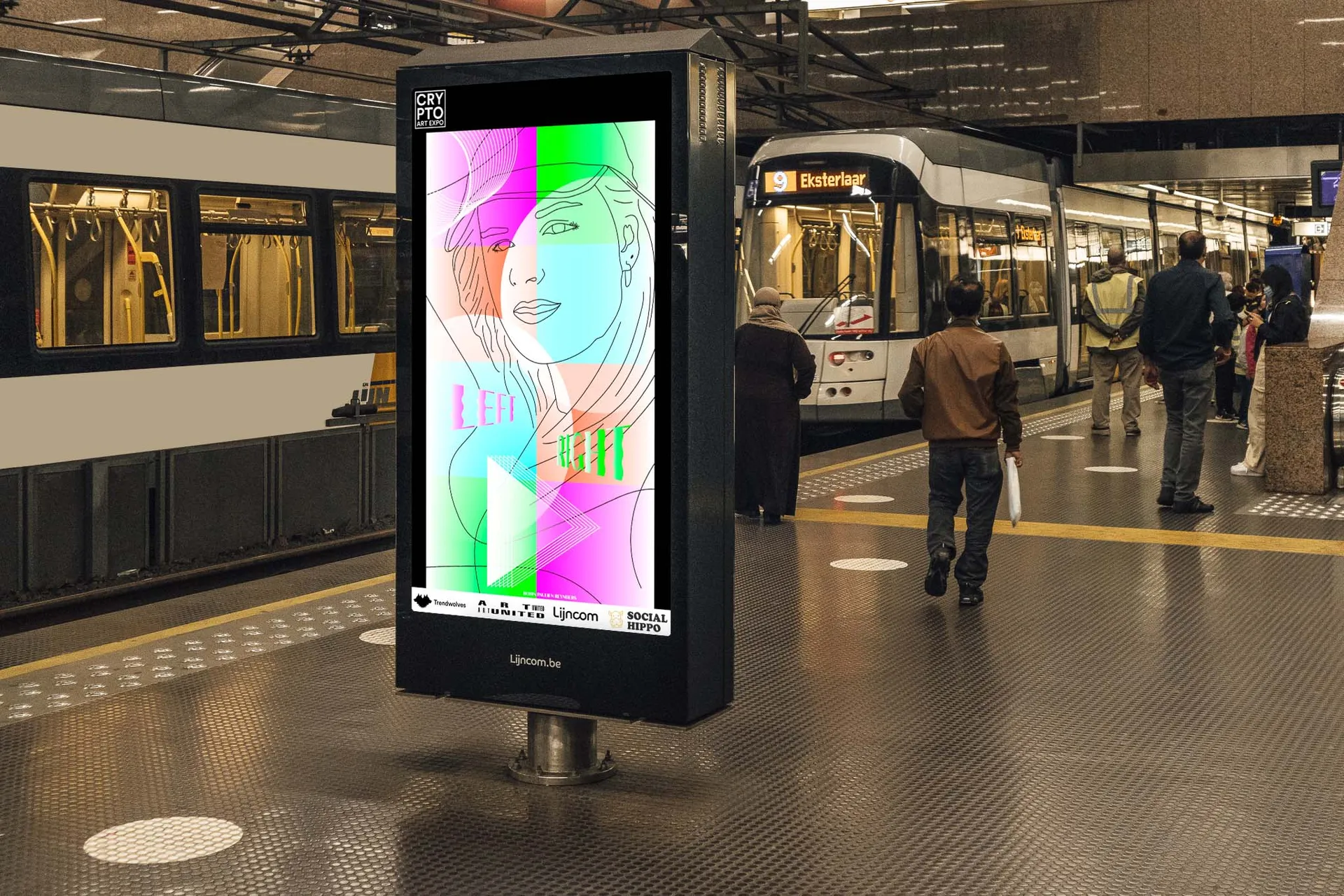
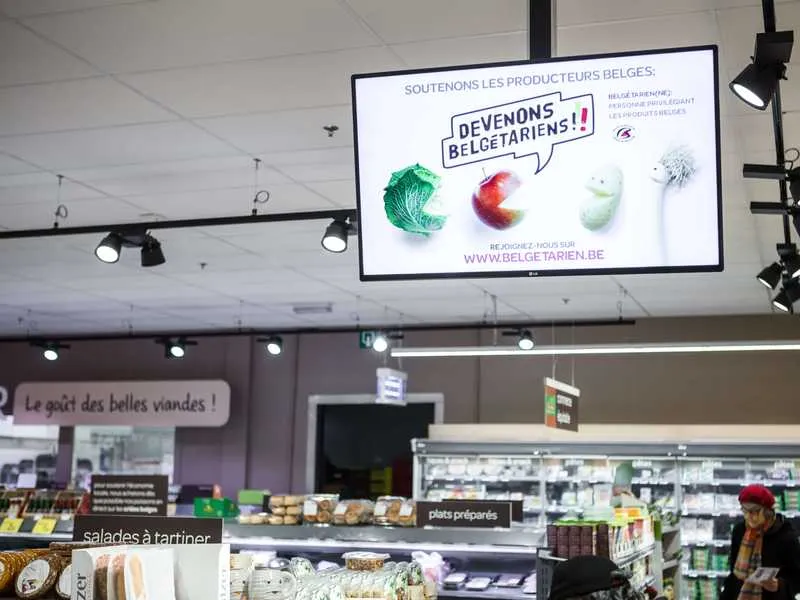
Antwerp has no centre so much as a spine, and the useful thing about it is that the crowd changes every few hundred metres while the walk stays short. It starts at Antwerpen-Centraal, where the international arrivals and the regional commute come in together and where people are early and idle. It passes Astridplein and De Keyserlei, hotels and brasseries, then the few trade streets of the diamond quarter directly behind the tracks. It continues into Leysstraat and the Meir, pedestrianised mass-market retail, and branches south into Huidevettersstraat and Schuttershofstraat where the register turns premium. It ends at Groenplaats and the cathedral, and in the fashion streets of Nationalestraat and Kammenstraat. Two zones cover almost all of that: 40 screens at the station end and 70 through the centre. A campaign that follows the axis moves a viewer from arrival to purchase inside about two kilometres, hitting a different audience profile at each segment, and that is a media plan a competitor's inventory list cannot give you.
The transit line in the mix is mostly on wheels, and we would rather say so
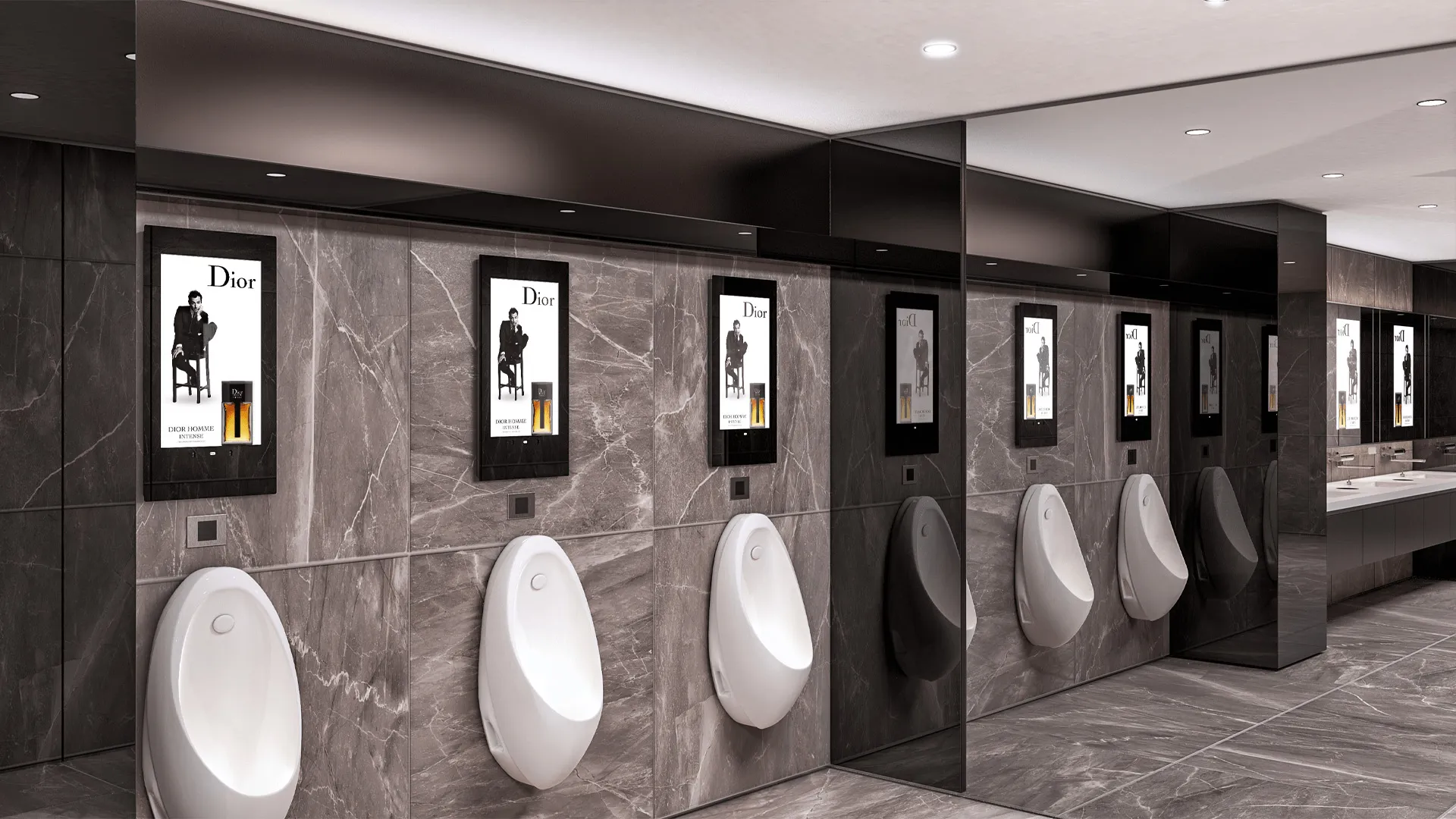
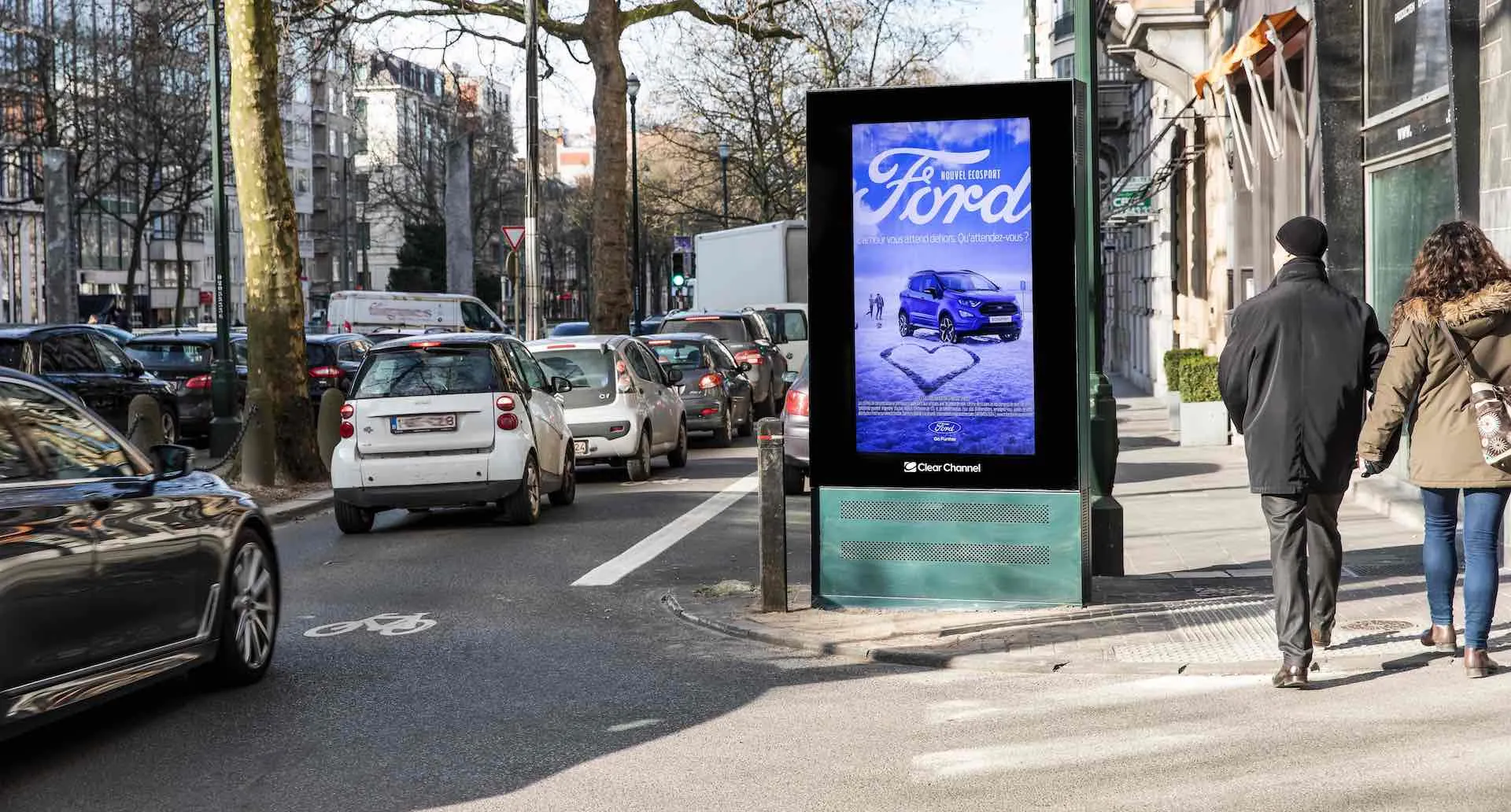
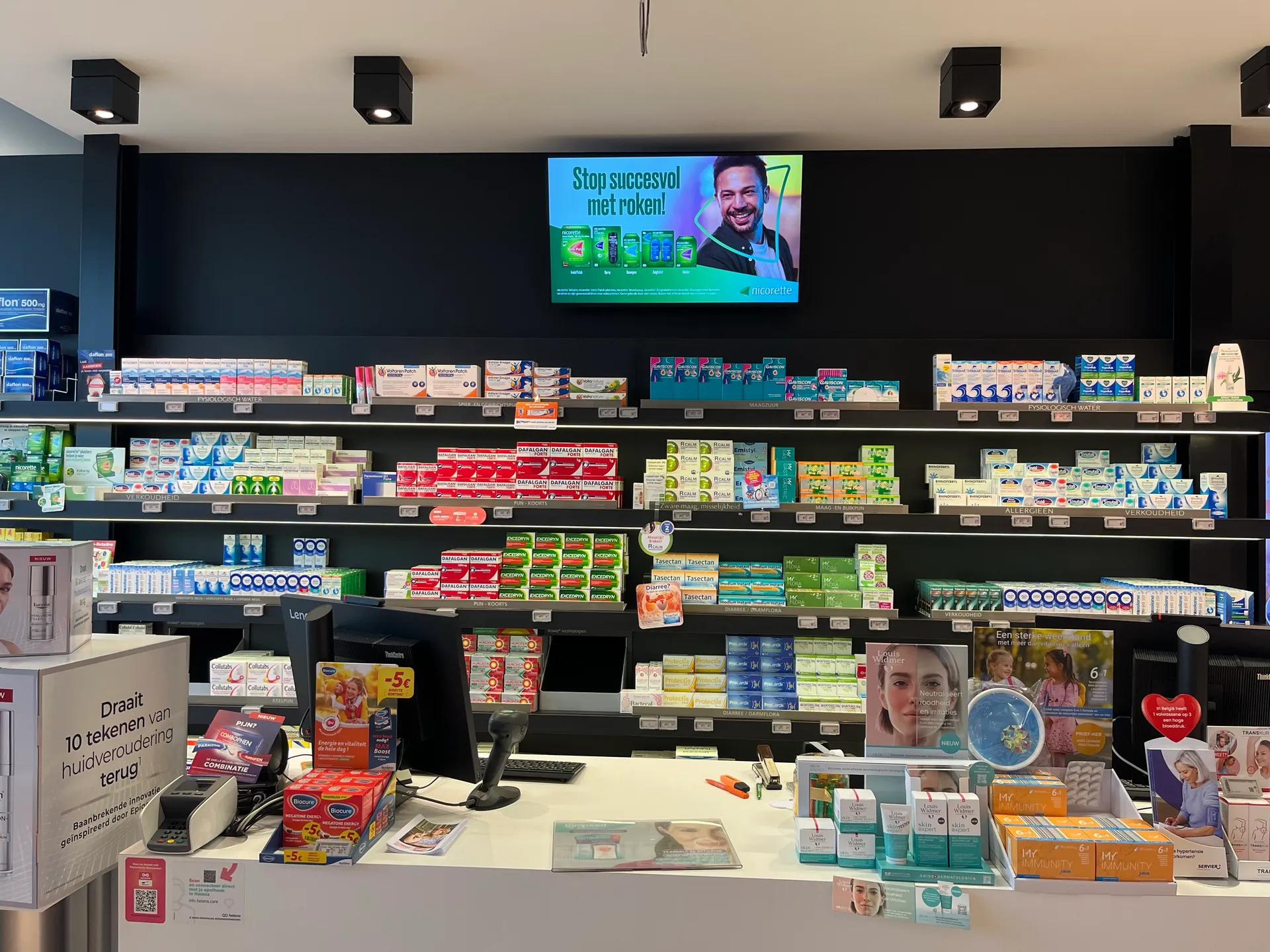
Read the venue mix at the top of this page and transit looks like the story: 200 screens, the largest single column. Most of it does not stand still. 180 of those screens ride inside taxis, which means they cover the city the way traffic does rather than the way an address does. Fixed rail inventory is a much smaller 40 screens, and street furniture in the classic sense is 60. This matters when you buy. The taxi layer is genuinely useful for city-wide presence at a low entry price, and it is the reason Antwerp can look bigger than its fixed network is. But a zone on this page is a place, so the zone counts you see are fixed screens only: no taxi is counted into a neighbourhood it happened to be parked in when we took the snapshot. Everything else in the mix has an address. Gyms are 110 screens, pharmacy counters 40, fuel stations 80, grocery and convenience together 30 and 30.
The districts are the city, and that is where the volume is
Berchem, Deurne, Merksem, Borgerhout, Wilrijk, Hoboken and Ekeren are districts of Antwerp, not villages next to it, and treating them as suburbs is the fastest way to sound like you have never been. It is also bad planning here, because the fixed network is weighted towards them: 90 screens in the north and east, 50 in the south, against 40 plus 70 on the axis itself. Add the ring municipalities at 90 and the arithmetic is clear: the centre is the sharpest buy, the districts are the biggest one. What that buys is a different daily life. Tram and premetro rather than walking, supermarket entrances and gyms rather than shop windows, and a young, dense commercial fabric in Borgerhout and Antwerpen-Noord that no centre address reaches. There is one honest caveat: this network does not cover Antwerp the way a poster network covers a city. It is precise along the axis and useful in the districts, and if someone promises you saturation of a city of half a million from 600+ screens, they are selling you something else.
A working city, which changes what DOOH is for here
Antwerp's money is made in freight, chemistry and diamonds rather than in tourism, and its advertising market follows. The audience is at work, in transit or on a shift pattern, and the two campaign types that behave differently here because of it are recruitment and B2B. Recruitment is the clearest case. Technical and logistics roles are hard to fill across the port economy, and the venues that reach those candidates are not the ones a consumer brand buys: fuel stations on the routes in (80 screens), gyms (110), supermarket and convenience entrances in the districts where those workers live. For B2B, the axis does the work instead: Centraal collects an international business audience twice a day, and the diamond quarter sits directly behind it, an entire global trade running out of a handful of streets next to a railway station.
Frequently asked questions
- Can I buy just the stretch from the station to the Meir?
- Yes. The two zones that cover the axis are sold as a perimeter like any other: 40 screens around Antwerpen-Centraal and the diamond streets, and 70 from the Meir through the historic centre. It is the smallest buy on this page that still gives you a full journey, from arrival to shop door, and it is the one we would start with for a launch or an event.
- How much of the Antwerp network actually moves?
- 180 screens of 600+ are taxi screens, so they follow traffic rather than sit at an address. We keep them out of every neighbourhood count on this page for exactly that reason. They are a good way to be present across the whole city cheaply, and a poor way to own one street: for that, buy the fixed inventory in a zone.
- Do you really reach Deurne, Merksem, Borgerhout and Berchem?
- Better than the centre, by volume. The northern and eastern districts carry 90 screens over 45 venues and the southern districts 50 over 20. What you will not find there is street furniture at centre density: the inventory is supermarket entrances, gyms, pharmacy counters and fuel stations, which is where daily life in those districts actually happens.
- What does two weeks in Antwerp come to?
- Most two-week campaigns here land between €500 and €1300, and the entry point is €250 per week. The variable is not really the city, it is how tight your perimeter is and how many plays you want in it. The simulator prices your exact selection before anyone talks to you.
- Should the creative be in Dutch?
- Antwerp is Dutch speaking and the default answer is yes, in Dutch, with place names left as they are: Meir, Groenplaats, Het Zuid, Antwerpen-Centraal. English works for an international audience at Centraal and inside the diamond quarter, and a French creative made for Brussels or Wallonia will read as imported. You can run different creatives per zone in the same campaign, which is usually the right answer when a buy covers both the station and the districts.
- We are hiring for technical and logistics roles. Does this work for that?
- It is one of the things Antwerp is genuinely good for. Reach the candidates where the shift pattern puts them rather than where a consumer campaign would go: fuel stations on the routes in (80 screens), gyms (110), and supermarket and convenience entrances in the districts. Point the creative at a QR or a short URL and keep the offer concrete, because a job ad on a screen competes with the pump, not with a magazine.
- Can I run something around a concert or a home match?
- You can buy the perimeter and the days, which is what most advertisers actually want: the crowd for the arenas at Schijnpoort and for the ground in Deurne travels out of the centre by tram and comes back the same way, so the axis and the district are one campaign twenty minutes apart. What you cannot do is imply that you are a partner or a sponsor of an event you have not signed with. Naming the fixture or the venue in the creative is where ambush marketing rules start to apply, and that is a conversation for your legal team before the booking, not after.
- Do I need a permit, or to pay the city's advertising tax?
- Not for what you buy here. Municipal advertising rules and the city's advertising tax concern signage you install yourself, on your own facade or in the street: the screens on this page belong to their operators, who carry the permits and the taxes for the positions. If you are also planning your own shop-front signage in Antwerp, check the current rules with the city directly, because they change and we are not the right source for them.
Want proof? See real campaigns · How pricing works
Other cities in Belgium
Your screens in Antwerp are waiting
Pick a neighborhood and a budget, and see your campaign before you pay a thing.