Account-based marketing
Your account list has a map. Use it.
Send us the companies you want to win. We find where they cluster, where their lookalikes sit, and put your campaign on the digital out-of-home (DOOH) screens around those addresses.
B2B marketing and growth teams working from a named account list: industrial suppliers, enterprise software, professional services, and public agencies whose audience is companies rather than consumers.
Everyone in your category is bidding for the same job titles on the same platform, and the person who signs the contract is the one who never clicks an ad. Your 200 target accounts sit at 200 real addresses, and nothing in your media plan uses that.
From account list to screen plan
-
We start from your list, not from our inventory
Send the accounts as a CSV out of your CRM. We geocode them, find the clusters they form, and only then look at which screens sit inside those clusters. The plan is built in that order, which is why it rarely looks like a normal city buy.
-
Lookalike zones, not lookalike audiences
The profile shared by the customers you already won becomes a set of map filters: sector, size, certifications, export markets. What comes back is a ranked list of places, not a black-box segment you have to take on faith.
-
The same list, handed back annotated
Every account leaves the campaign with the zones and dates it sat inside. That is what you cross against your pipeline, in your own CRM, to see which accounts moved while you were on screen.
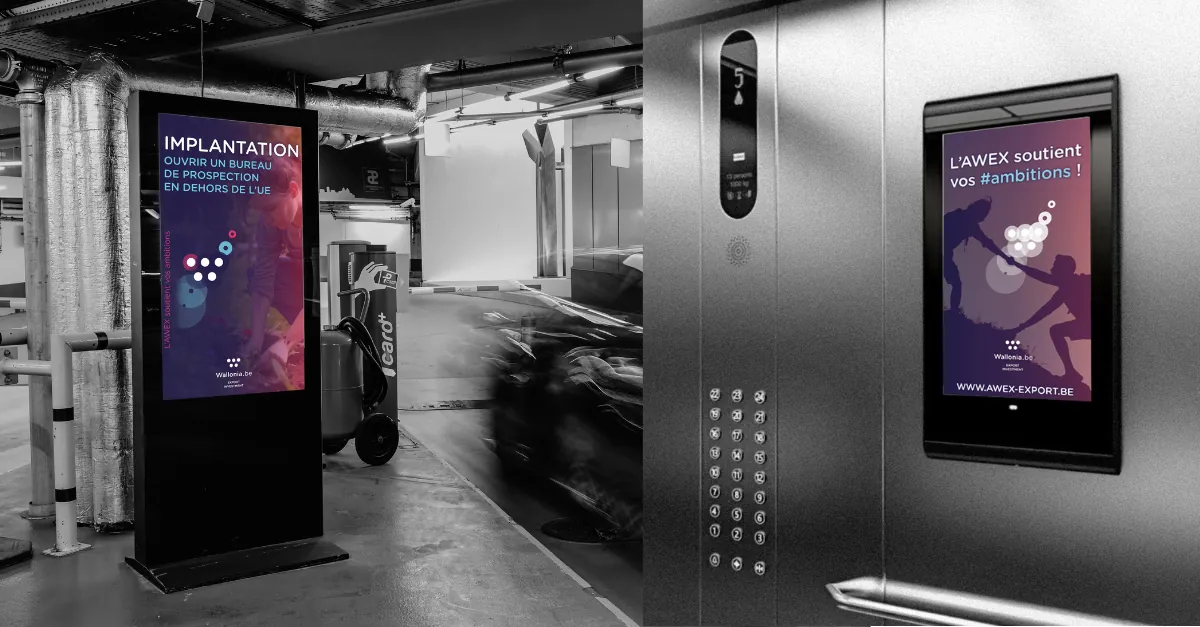
From an account list to a screen plan, in five moves
Nothing here asks you to adopt a new tool. It starts with a list you already keep and ends with that same list, annotated.
-
Your account list arrives
Export company names and addresses from your CRM or spreadsheet. Include won customers as well as targets.
-
We read your customers, not your wish list
We turn the traits shared by won accounts into map filters: sector, size, certifications and markets.
-
The lookalike zones get drawn
Those filters reveal the business parks and industrial clusters where similar companies concentrate.
-
Every screen gets checked against its neighbourhood
We check the companies, catchment and daily routes around each screen before it enters the plan.
-
The list comes back to you
You receive the list with campaign zones and dates, ready to compare with pipeline movement.
One campaign, read back
AWEX, February 2026. Who was in front of the screens?
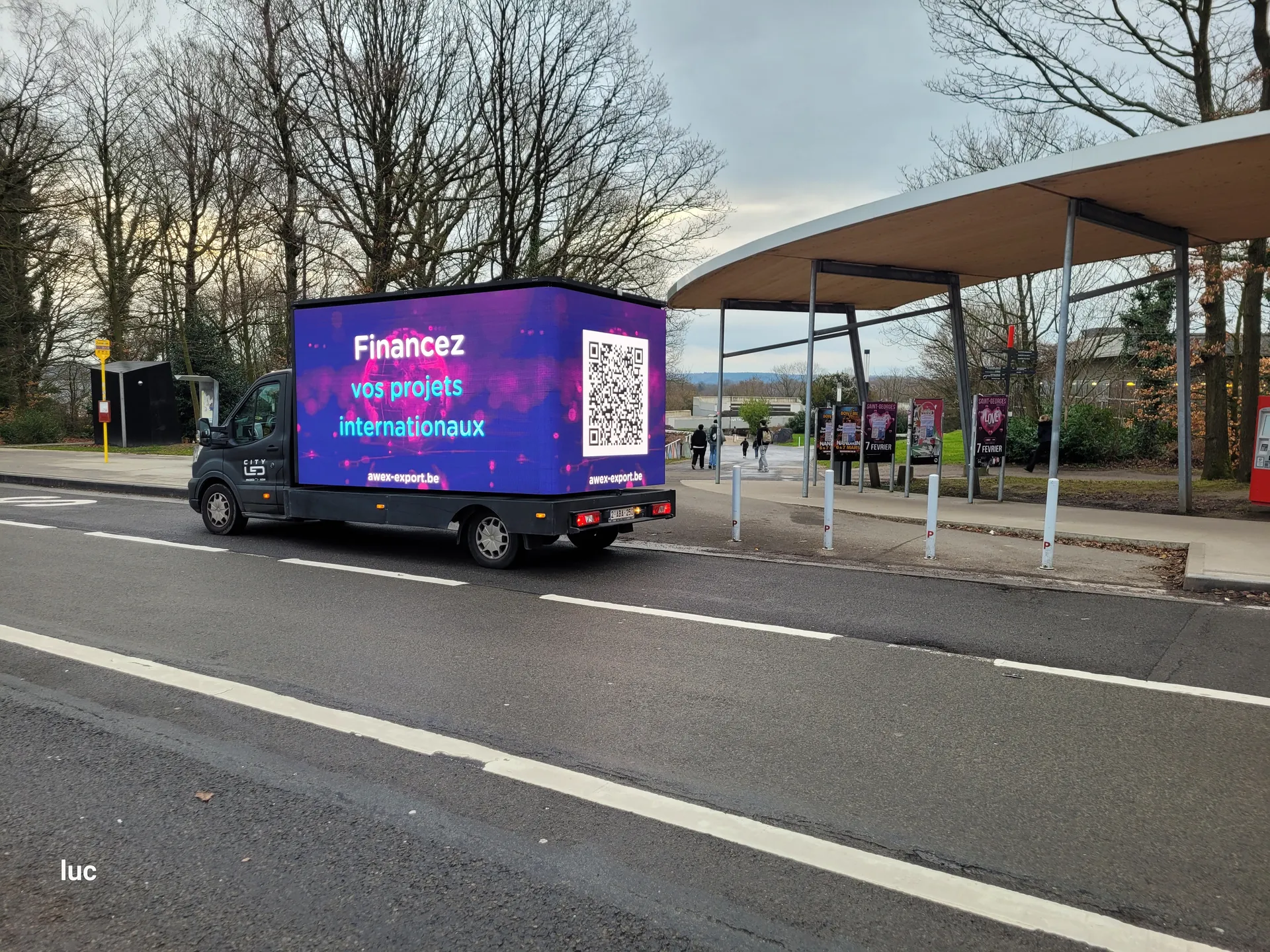
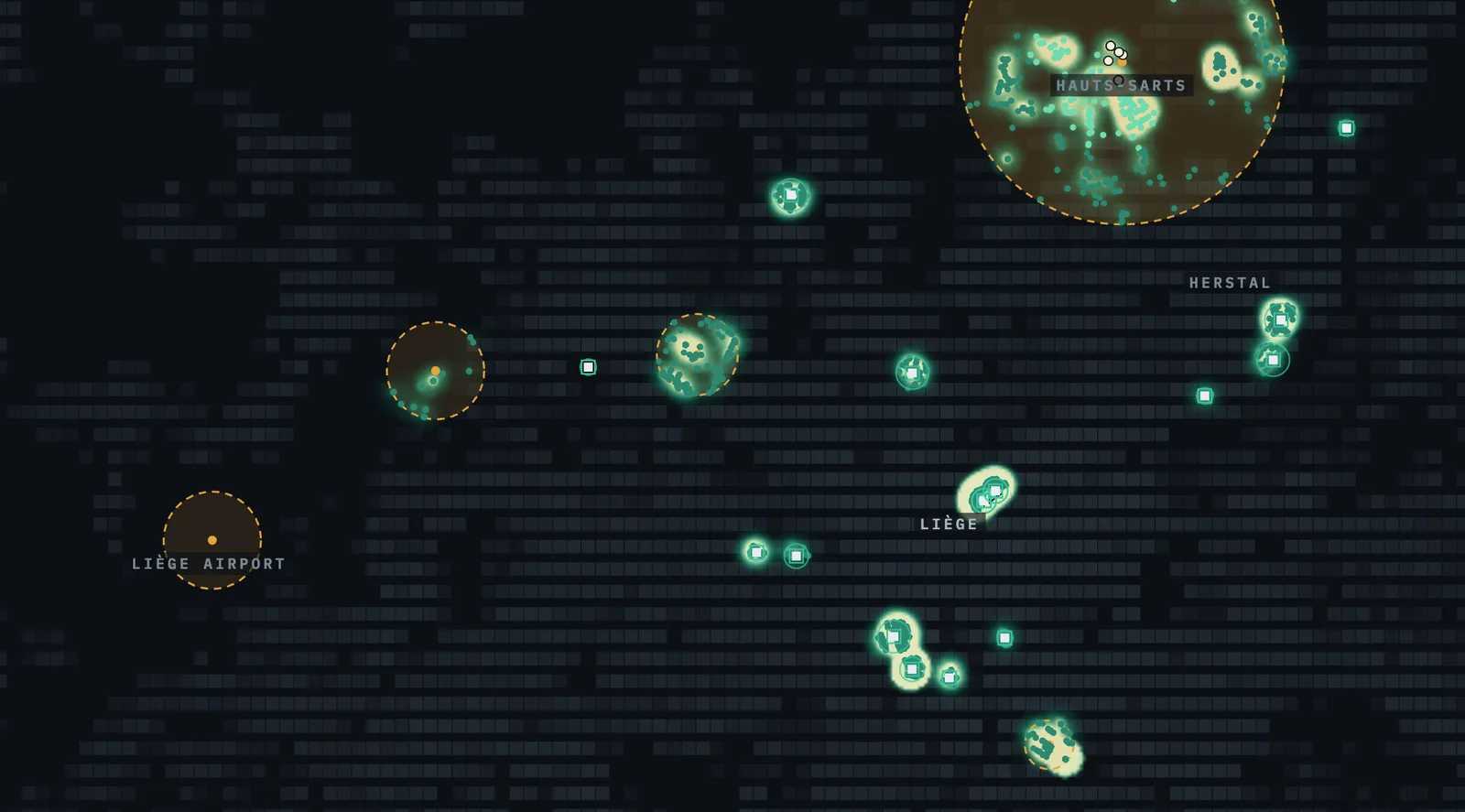
Walloon exporters had to hear about AWEX’s incentive programs. 83 screens in Liège, Charleroi and Louvain-la-Neuve, plus an LED truck through twelve business parks. Then we crossed every screen and truck stop with the company register.
- 4,945
- companies plausibly reached
- 100
- of them on AWEX’s hot list
- 12
- days on screen
- Where
- Liège 2,283 · Brabant wallon 1,102 · Charleroi 1,032 · Namur 365 · Mons 163
- Best scores
- Mons: a full truck day at the Initialis park
The plan skipped Brussels for the Liège industrial belt. That is where the exposed companies sit.
Campaigns aimed at companies, not shoppers
Public agency, real estate and telecom campaigns built around business audiences. Each case carries its own zones, window and delivered airtime.
Real campaigns
All case studies → How AWEX Reached Over 650,000 B2B Decision-Makers Through Strategic DOOH
83 screens · 12 campaign days · +656,000 impressions
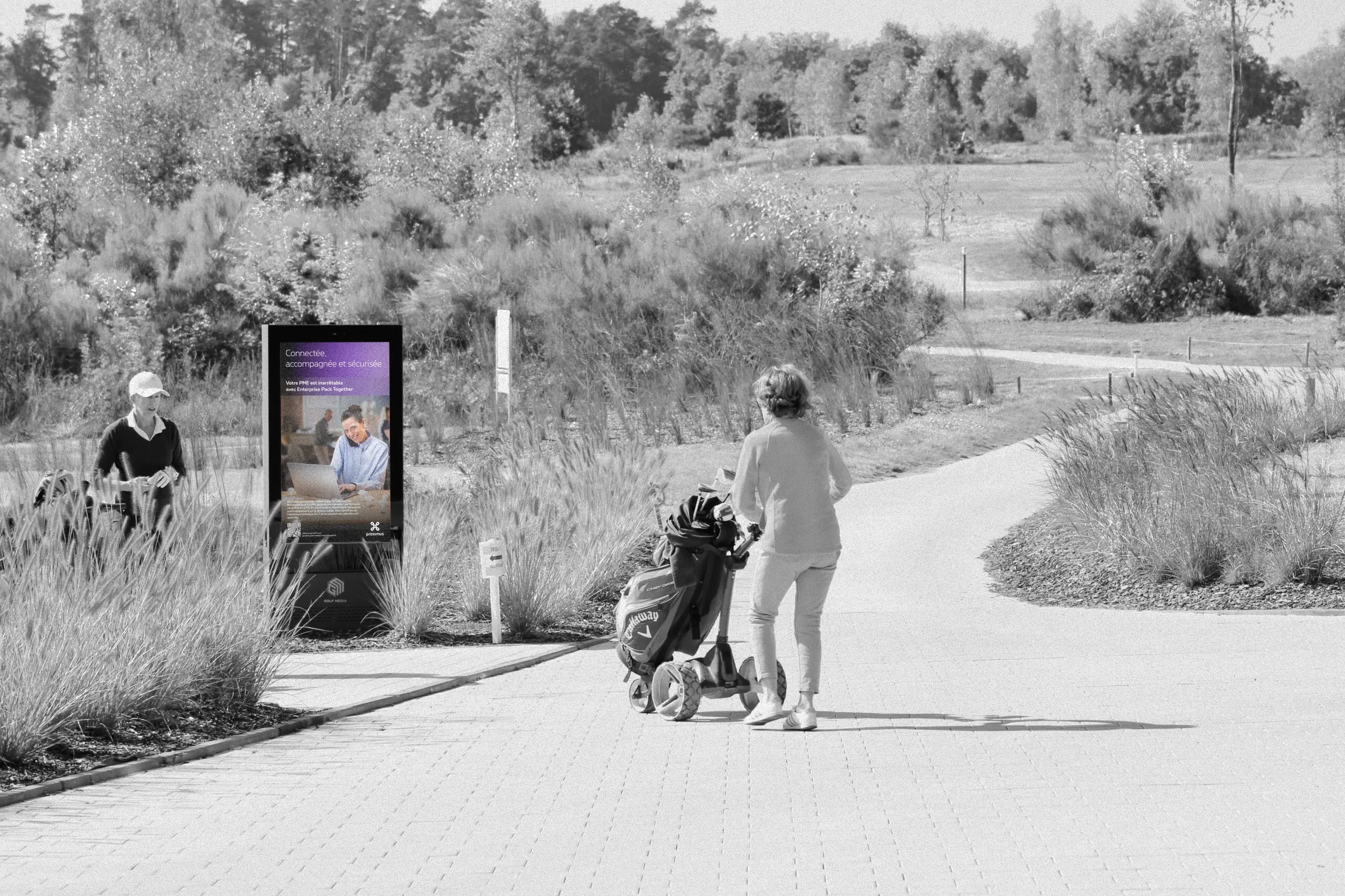
Proximus targets Belgian entrepreneurs with contextual DOOH for SME packs
50 locations activated · 86 premium screens · +1M total broadcasts
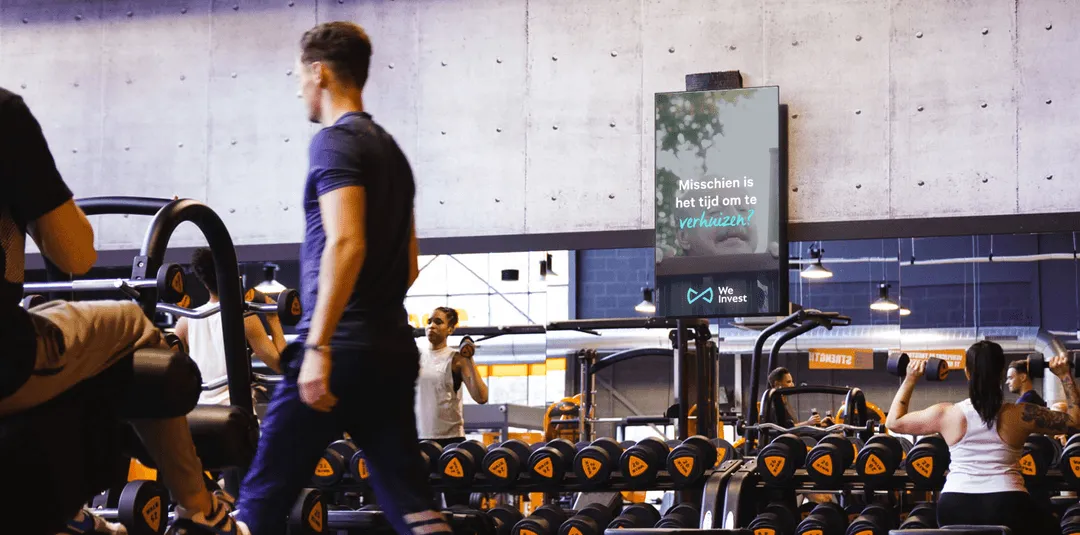
WeInvest chose to integrate glooh into its communication plan in parallel with their social networks
5 screens · 20 campaign days · 140,000 contacts
Before you ask us
Do you need access to our HubSpot or Salesforce?
No. A CSV export of company names, with addresses where you have them, is the entire input. There is no connector to install, no contact data involved, and nothing personal leaves your CRM. If you would rather send a spreadsheet you maintain by hand, that works exactly as well.
Our target list is forty companies. Is that too small for outdoor?
Usually not, but it changes the shape of the plan. Forty companies rarely justify their own screens one by one; the same forty often sit in five or six business parks, which is a plan. When the list is too scattered for that, we widen to the lookalike zones around the profile instead of pretending the pins are a campaign.
How is this different from account targeting on LinkedIn?
It reaches the same companies through a different door. LinkedIn reaches the people who are on LinkedIn, at the price everyone else in your category is bidding. Screens reach everyone at that address, including the operations director who signs and never scrolls. Most teams run both: the platform for the individual, the street for the company.
Can you prove that a specific account saw the ad?
No, and anyone promising that for out-of-home is selling you something. What you get is delivered airtime and estimated reach per zone, with the accounts inside each zone named. The proof comes from your side: cross that list against your pipeline over the campaign window and compare it with the accounts you did not cover.
The last mile your agency does not cover
5 to 10% of the digital budget, moved onto screens nobody else sells you, with the measurement that goes with it.