USA
DOOH USA: your brand on digital screens in 200+ cities
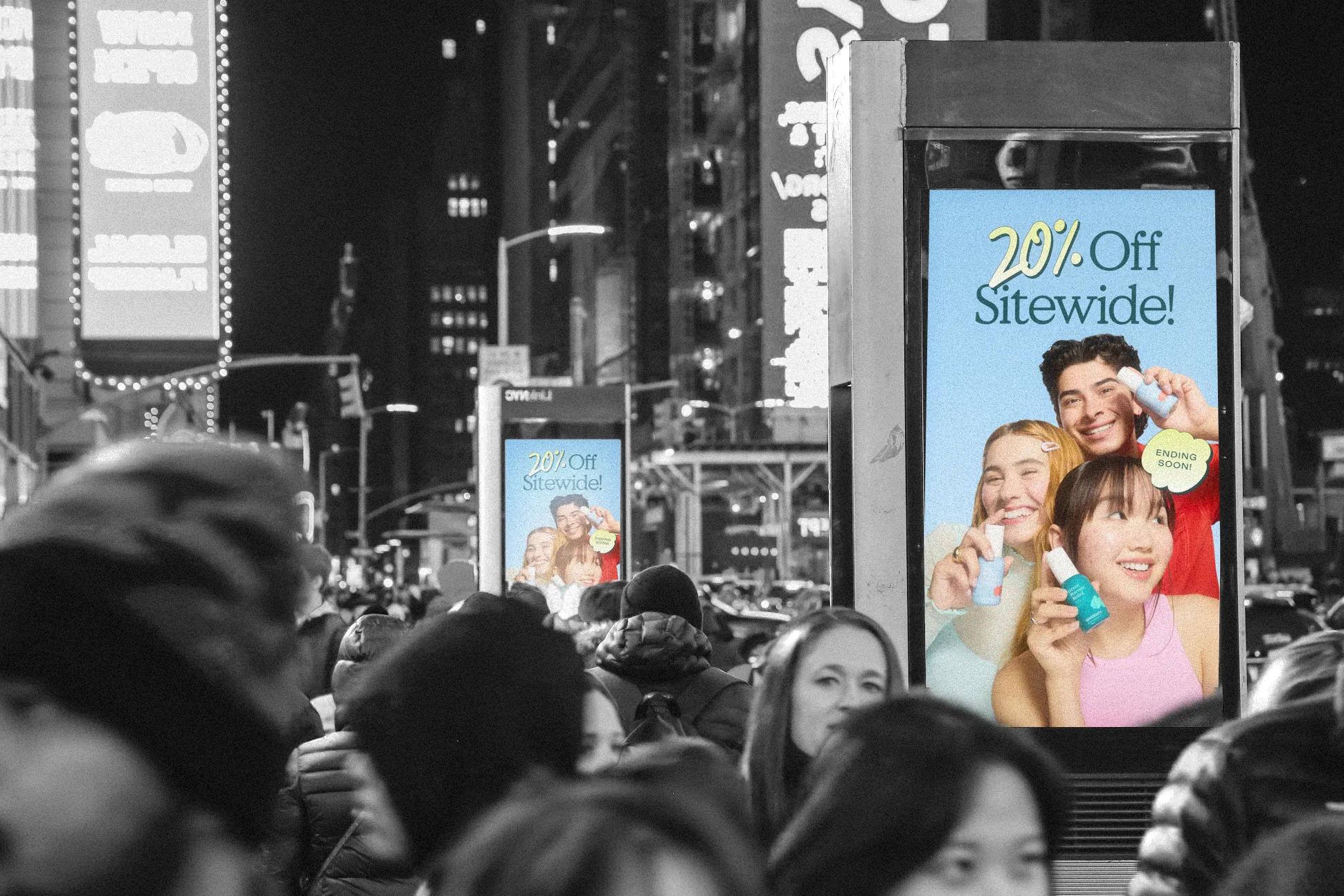
Digital out-of-home (DOOH) is advertising on the screens in streets, stations, gas stations and stores. The US market is worth over $4.5 billion. glooh opens 100,000+ of those screens to you, from Times Square to the grocery store on your customers' corner.
- 100,000+
- Digital Screens
- 330M
- Population
- $4.5B+
- Market Size
- 200+
- Cities Covered
Inventory current as of 2026-06
Cities covered
New York
Los Angeles
Chicago
Miami
San Francisco
Dallas
Screens you can book yourself
You do not need a media agency or a year-long contract. Choose the neighborhoods you want, set a budget, and your campaign runs on the same screens the national brands use.
What you can do in an afternoon
- Build and launch a campaign yourself - Change your screens, dates and creative while it runs - Reach the big US networks whatever your budget
What you get with glooh
Every step works the way the rest of your marketing already works: - A platform you know how to use: build a campaign the way you post to social - Local to national in one campaign: adjust your reach as you go - The big US networks, plus thousands of screens inside venues - Your existing content, reused: our design tool turns a social post into a screen-ready ad - Your scale: start small, grow when it works
Where your screens can be
Pick the setting that matches what you sell. - Retail: shopping streets, malls, supermarkets and hypermarkets, inside and outside the store - Transport: train stations, subway stations, gas stations and airports - Leisure: cinemas, theaters, gyms, bars and restaurants - Business: business districts, office buildings and trade shows - Street: digital billboards on busy roads, in parking lots, public spaces and transit stops
The networks behind the screens
Lamar Advertising, OUTFRONT Media and Clear Channel Outdoor for the roadside billboards. GSTV at gas stations, Volta at EV charging points, and thousands of screens in gyms, grocery stores, bars and offices. One booking covers them all.
Frequently asked questions
- How do I buy screen time in the US?
- You choose where and when: a city, a neighborhood, a venue type, a time of day. Your budget is the ceiling and you set it before anything runs. There is no long-term contract and no minimum commitment.
- What is the difference between roadside and in-venue screens?
- Roadside screens are the digital billboards along highways and city roads, run by networks like Lamar Advertising, OUTFRONT Media and Clear Channel Outdoor. In-venue screens sit inside places people spend time: gas stations, gyms, grocery stores, EV charging points, bars and restaurants. People glance at a roadside screen and linger in front of an in-venue one, so the two do different jobs in the same campaign.
- How can European brands run campaigns in the US through glooh?
- Plan and run your US campaigns from the same place you run your European ones. There are no local contracts to negotiate: glooh handles the buying, the billing and the reporting, in one dashboard.
- How do I know how many people saw my campaign?
- The US industry standard is Geopath, which estimates how many people saw a screen from traffic counts, mobile location signals and demographic modelling. Your glooh report shows those audience numbers next to the log of every play your campaign actually got.
- Which US cities have the most screens?
- New York, Los Angeles, Chicago, Miami, San Francisco and Dallas have the highest screen density. New York alone covers the subway, the Times Square spectaculars, taxi tops and thousands of venue screens. glooh covers every major US market.
- What is DOOH and how does it work in the United States?
- DOOH stands for digital out-of-home: outdoor advertising on digital screens instead of printed posters. In the US that means over 100,000 screens in streets, stations, stores and venues. Your ad plays on a schedule you choose, and you can change it any day.
- Who is glooh particularly suited to?
- glooh works for advertisers who want the street to work as fast as the rest of their plan: - Local businesses that want to be seen in their own neighborhood - National brands running at scale across several cities - Agencies running outdoor campaigns for their clients - Retailers who want more people walking through the door - Brands whose online campaign should also exist in the street
- How is this different from booking a billboard the old way?
- - You book in minutes instead of weeks of back-and-forth - You commit for the campaign, not for the year - You choose neighborhoods rather than whole cities - You change screens, dates or creative while the campaign runs - You see what played, where and when
- I have shops. How does this bring people in?
- - Screens within walking distance of your doors - The same creative you are already running online - Local offers, changed the day they change - A read on what your campaign did while it was live
Want proof? See real campaigns · How pricing works
Explore more locations
Your screens in USA are waiting
Pick a neighborhood and a budget, and see your campaign before you pay a thing.